Two-stage gel seating

EquaGel Two-Stage Gel Wheelchair Cushions

Skeptical after one more premium cushion claim? EquaGel's dual-layer gel spreads load across two grids, at a 4.3★ verified buyer average.

  • Peak pressure down 41% versus foam
  • 4.3 stars from 136 verified reviews
  • 30-day return window through the retailer
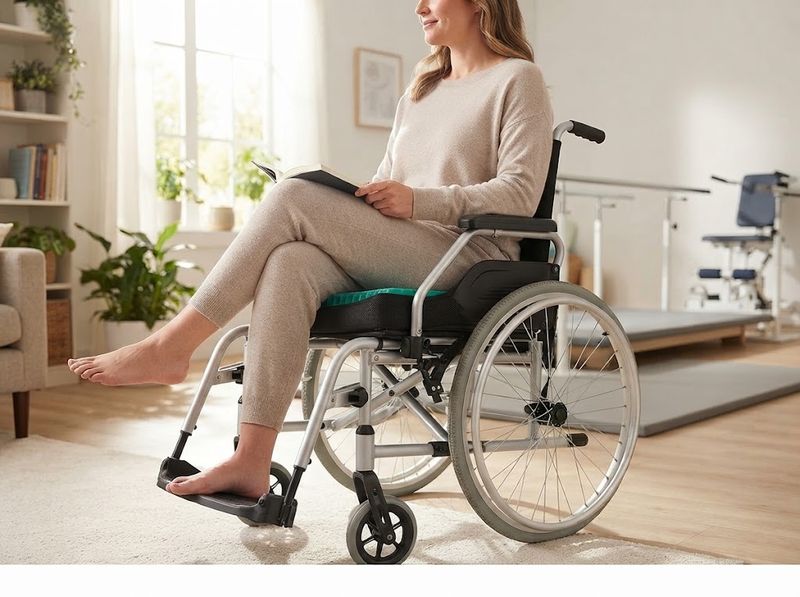
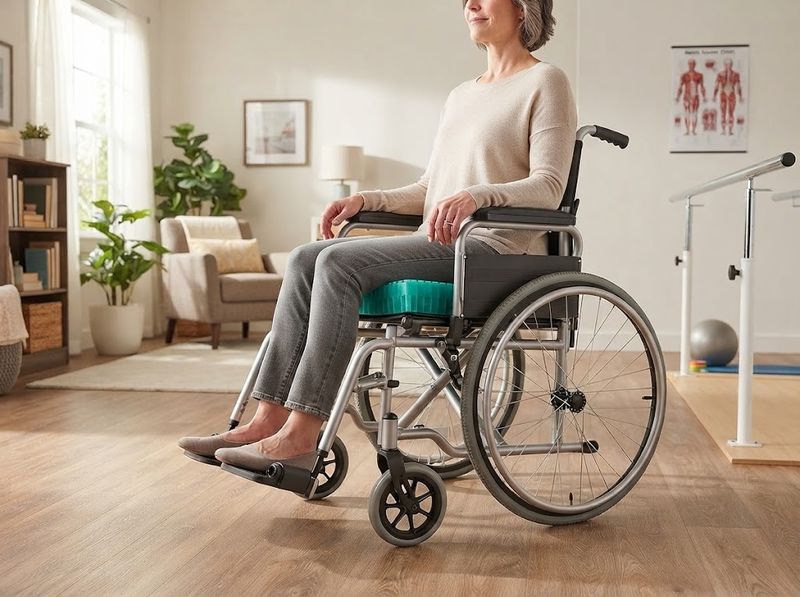
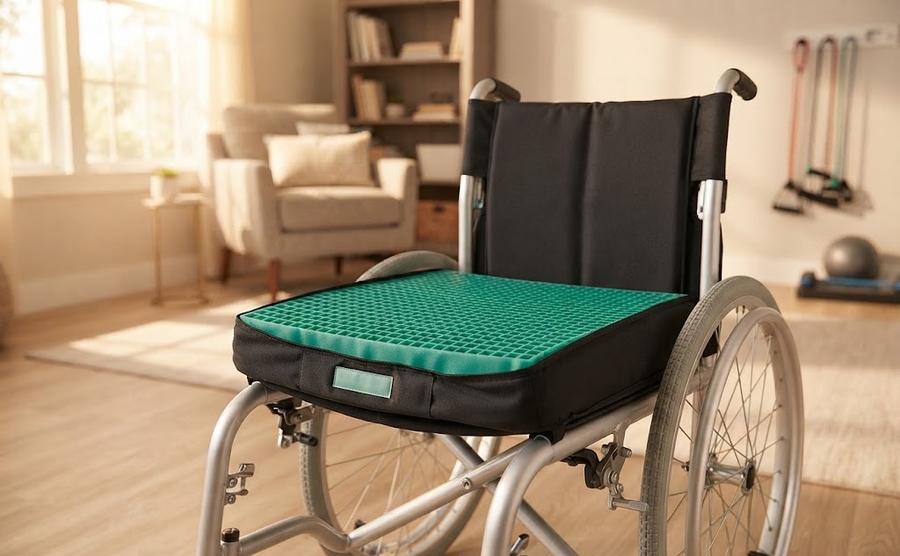
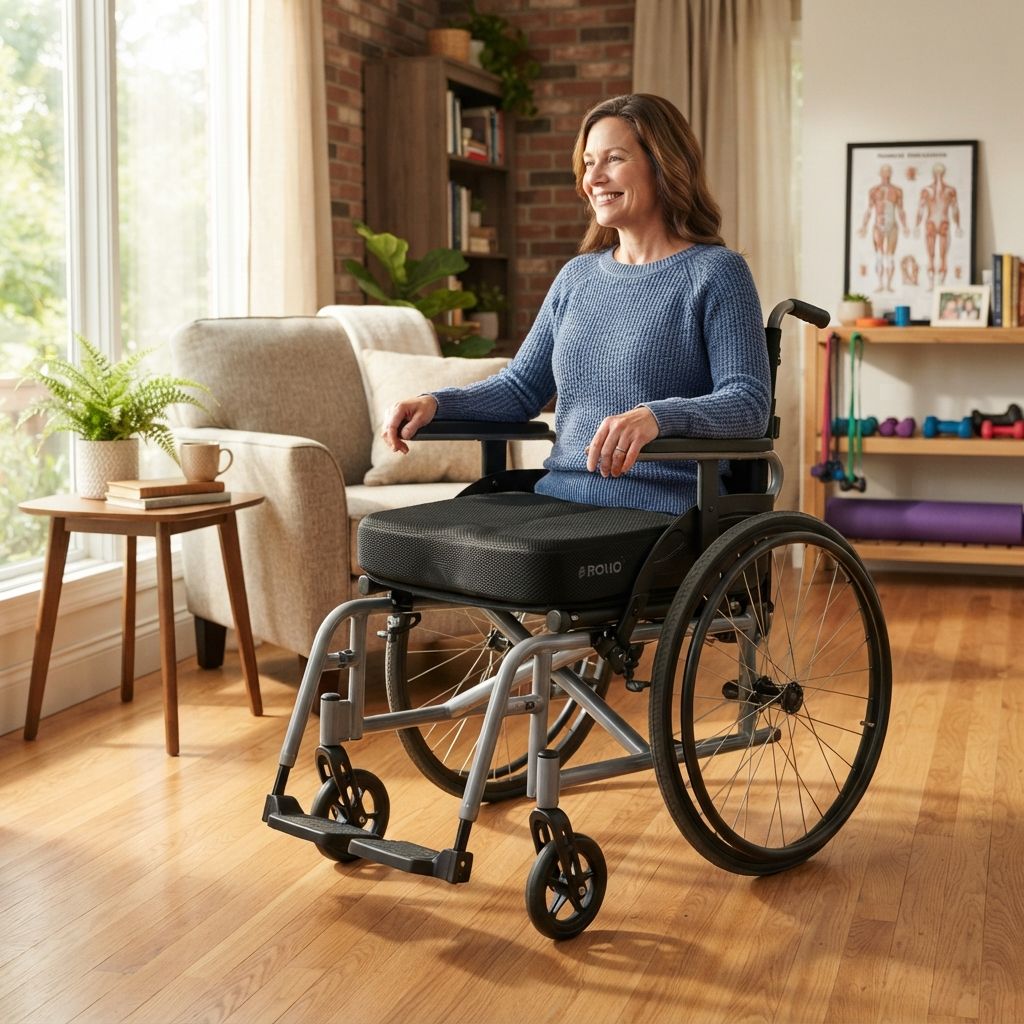
EquaGel gel cushion on a manual wheelchair in a sunlit living room
41%Lower peak pressure
4.3★136 verified ratings
E2603 / E2604Medicare coded Protector
30 daysRetailer return window

Why a Gel Wheelchair Cushion Beats the Foam Pad You Have

EquaGel builds pressure-sore prevention into every layer, from the thin-wall comfort grid down to the flame-resistant cover you wipe after a spill.

  1. 01

    Measured Against Foam, Not Against Adjectives

    The maker's own pressure test put the dual-layer core beside a standard foam pad and logged up to 41% lower peak load.

  2. 02

    Verified by 136 Buyers Who Sat for Months

    A 4.3-star weighted average lands across every verified rating, left by full-time chair users rather than by a single unboxing note.

  3. 03

    Place It Backwards and Nothing Changes

    Drop the flat Straight Comfort into a sling seat facing any direction; night staff cannot misorient it during a 3 a.m. transfer.

  4. 04

    The Cover Wipes Clean After an Accident

    Fluid-resistant, vapor-permeable, flame-resistant fabric takes a 2 a.m. incontinence episode; unzip it, hand-wash it, and the gel core underneath stays dry.

  5. 05

    A Full Workday Passes Without Constant Shifting

    The open-cell top grid immerses your bony points instead of propping them up, so an eight-hour desk day ends without the hourly lean-and-lift.

  6. 06

    Two Documented Limits, Printed Not Buried

    Gel warps permanently above 105°F and trimming voids the warranty; a 30-day retailer return window covers a sizing miss instead.

Which EquaGel cushion fits your chair

EquaGel builds every model on one gel core. Measure seat-to-floor height before you pick: the flat Straight Comfort barely lifts you, the Balance runs cooler, the Protector stacks higher for a deeper pelvic well.

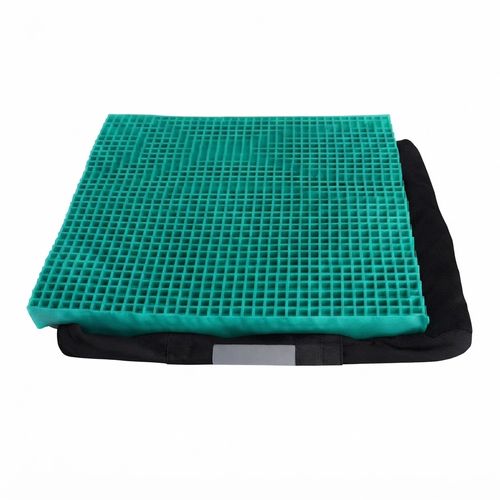
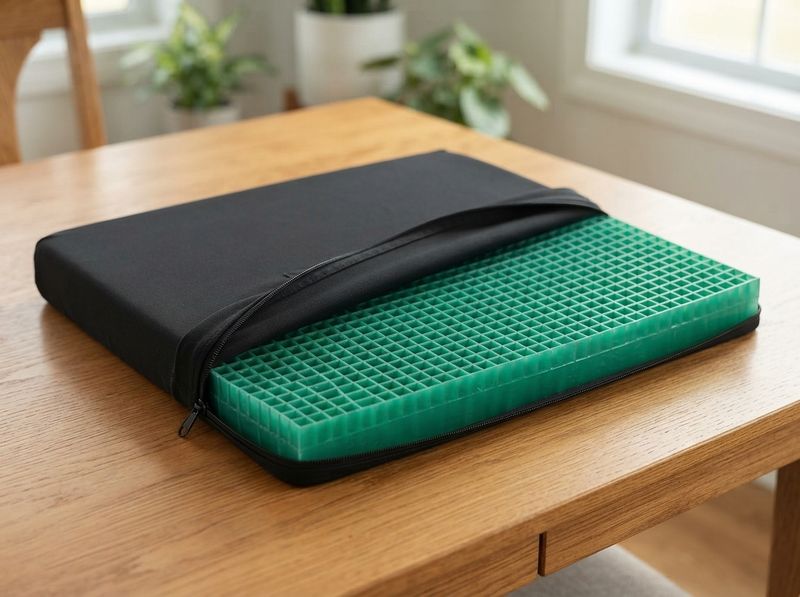
EquaGel Straight Comfort flat two-stage gel wheelchair cushion

EquaGel Straight Comfort Cushion

18 × 16 × 1.75 in · 4.65 lb

★ 4.5 (38 verified ratings)

Paying gel money for a flat pad reads like a downgrade until four chairs get turned over before midnight with no wrong side to find. This cushion performs the same facing front, back, or sideways, and no aide can misorient it at shift change. Sit for three hours and the thin-wall cells on top swallow the sit bones while the thick-wall layer beneath keeps carrying the weight. Where a contoured foam pad set in backwards tips the pelvis forward all afternoon, this one has no wrong side. Entry-level in the range, made in the USA, and 4.65 lbs to lift out of a trunk. Measure the chair frame the day it arrives, and a width that misses goes back inside the retailer's 30-day return window.

  • Rotates 90 degrees to cover a narrower 16 by 18 inch frame without a second purchase
  • Flat build works because both gel stages run edge to edge with no front-back taper to align
  • Returnable through the retailer inside 30 days if the width misses the frame
Check price
EquaGel Protector contoured gel wheelchair cushion

EquaGel Protector Cushion

18 × 16 × 2.5 in · 6.3 lb

★ 4.3 (15 verified ratings)

Wound-care plans name a seating surface, and this is the model Medicare recognizes for it under codes E2603 and E2604. The pelvic area drops 3/4 inch below the surrounding gel, so the offload point a therapist set on Monday is still the offload point on Friday. Press a thumb into the seat and the tight top grid gives first at the bone, while the wide grid underneath holds posture all day. Where a flat pad lets the pelvis creep forward across an afternoon, the contour holds the position. Set the 6.3-lb USA-made flagship on the chair the afternoon it lands; a wrong depth goes back inside the retailer's 30-day window.

  • Drops the pelvic zone below the surrounding gel so the therapist's offload point holds through a full day
  • Sit an eight-hour day and posture holds, because the base cells run a thicker wall than the comfort cells immersing bone above.
  • Coded for Medicare skin protection, with a 30-day retailer return window
Check price
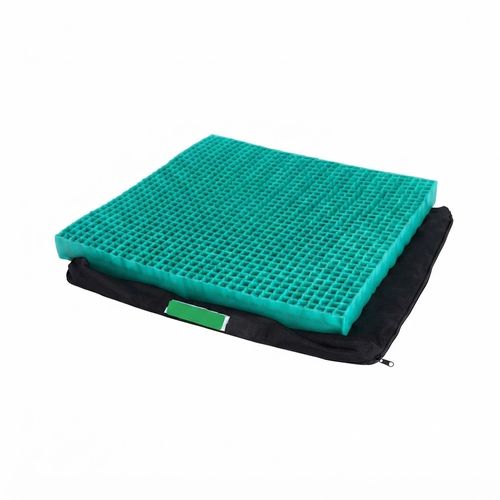
Medline EquaGel Balance gel wheelchair cushion with stretch cover

Medline EquaGel Balance Cushion

18 × 16 × 1.75 in · 4.9 lb

★ 4.2 (83 verified ratings)

Heat ends most long sits, not pressure alone, and this cushion attacks both. Settle in for a two-hour class and the open cells take the sit bones while air and moisture keep moving out from under you. The dual-layer structure still redistributes load, and the all-way-stretch cover slides with your skin during a board transfer rather than dragging it. Where a vinyl-backed foam pad turns into a warm plate by mid-afternoon, this grid keeps venting. Wipe the 1.75-inch pad with a cloth after dinner and it dries before the evening transfer; 83 verified ratings average 4.2 stars. Check the paperwork before ordering: if a Medicare code has to appear on it, the Protector is the model to fit instead.

  • Sit six hours and the open-cell grid keeps venting heat instead of turning into a warm plate
  • Micro-Immersion cells cradle bony areas because the open structure lets air and moisture pass through
  • All-way-stretch cover slides with skin during a board transfer where a fixed cover drags
Check price

The Scenarios the Gel Grid Was Engineered Around

Careless placement, pelvic drift, layered load, and a 2 a.m. incontinence episode each drove a specific EquaGel design choice.

Care aide sliding an EquaGel Straight Comfort cushion into a wheelchair sling seat

Place It Any Way and It Still Performs

Set the flat Straight Comfort on a wheelchair frame any way around and the 1.75-inch pad carries the same load by hour six. A night aide sliding it into a sling seat at shift change cannot get the orientation wrong. Rotate the same cushion 90 degrees at a Tuesday fitting and it drops onto a narrower 16-by-18-inch frame without a second purchase.

  • Slide it into the chair at 6 a.m. facing backwards and the grid still spreads load the same way by noon.
  • Run a thumb along either edge before the first transfer: both gel stages reach the seam, leaving no front-back taper to line up.
  • Where a contoured foam pad set in backwards tips the pelvis forward all afternoon, this one has no wrong side.
See the EquaGel Straight Comfort Cushion
Contoured EquaGel Protector cushion pelvic well seen in side profile

A Contour That Holds Your Pelvis Where the Therapist Set It

The Protector drops the pelvic area 3/4 inch below the surrounding gel, so your seat position holds through an afternoon of self-propelling. That contour matters most when a wound-care plan is already underway and the same offload point has to be hit every day. Write E2603 and E2604 on the intake form at the fitting, and Medicare reads the cushion as skin protection, not a comfort accessory.

  • Line the pelvic well up over the wound site each morning, and six weeks of dressing changes hit the same offload point.
  • Add 2.5 inches of seat height and check your footplate at the next fitting, since the deeper build raises your knees against the frame.
  • Where a flat pad lets the pelvis slide forward across a morning, the contour keeps the ischial load centered.
See the Medicare-coded Protector cushion
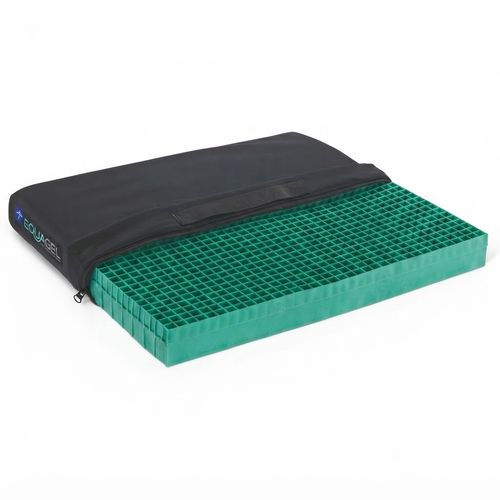
Two-stage gel grid of an EquaGel Straight Comfort cushion in close view

The Top Grid Sinks, the Base Grid Catches

Hyper-Elastic Polymer Gel fills both stages, but sit down and the two grids do different jobs across an 8-hour shift. Lower onto the top stage and its small open cells buckle on thin walls, so bony points sink in instead of perching. Press down harder and the base stage, cut from larger cells on thick walls, catches the load before you reach the sling underneath.

  • Press your palm into the seat and the top grid collapses first while the base grid holds firm underneath.
  • Press a thumb into the top layer and it buckles under light load, where a foam block of the same thickness compresses uniformly under the same thumb.
  • Where single-density foam flattens over months of daily sitting, the thick-wall base grid keeps a reserve under the sit bones.
See the EquaGel Straight Comfort Cushion
Removable stretch cover of a Medline EquaGel Balance cushion beside its gel core

A Cover Built for the 2 a.m. Incontinence Episode

An incontinence episode at 2 a.m. tests the cover, not the gel, and the EquaGel face hands you a wipe-down instead of a stripped bed. The EquaGel-branded cushions ship a fluid-resistant, vapor-permeable, flame-resistant cover: fluid stays on top, water vapor still escapes, and the seat never turns into a sauna by afternoon. Wipe the Medline Balance cover with a cloth after lunch and the stretch knit cleans up, though it targets heat and moisture rather than spills.

  • Unzip the cover after a spill, hand-wash it in the sink, and the gel core underneath needs nothing but a wipe.
  • Press a dry palm to the seat after a two-hour sit: the weave has passed body vapor out while holding a spill on top.
  • Where a vinyl-backed pad traps heat against skin through a summer afternoon, the open-cell grid keeps air moving under you.
See the Medline EquaGel Balance Cushion

Months of eight-hour days, in owners’ words

Ratings run 4.2 to 4.5 stars across the gel models, and the mixed notes below are kept in with the good ones.

★★★★★

I've tried many different cushions and all have failed to meet my expectations until now. It's super supportive, stays in place and doesn't slide like every other cushion. No other cushion compares; this has everything a movable seat cushion should have.

Verified buyerStraight Comfort Cushion

★★★★★

The nursing supervisor at my mom's assisted living facility recommended this one because it lasts so much longer than the inexpensive ones. The gel cells are smaller, providing more support than an inexpensive one we tried. I anticipate this will be good for daily use for years.

Verified buyerStraight Comfort Cushion

★★★★☆

Good support, but many who want to apply heat to a sore hip should read the sheet first. I used a heat pad regularly with my old pad. EquaGel instructions say that temperatures above 105 degrees may deform the pad: “if your cushion gets above 105 degrees F, do not sit on or fold it, as it could warp the EquaGel.”

Verified buyerStraight Comfort Cushion

★★★☆☆

I bought one of these and it was too big for my office chair, so I tried it in my recliner. The padding in that seat had gotten thin, so it needed help. When the front edge corner dug into my thighs I trimmed off just a little to round it slightly, knowing that would void the warranty. I really wish I hadn't.

Verified buyerStraight Comfort Cushion

★★★★☆

After 60+ years of wheelchair living, I find this cushion to be the most comfortable ever. However, it appears they lined the top part of the cover with some sort of soft material. After the first washing that soft layer pretty much dissolved, leaving a mess in the machine. Use care when cleaning.

Verified buyerMedline EquaGel Balance Cushion

★★★★★

I bought this to augment the seat cushion on my office chair and it is the most comfortable seat cushion I have ever sat on. There is no air or liquid to leak, and it stays cool and distributes weight very evenly. It is medical-grade, designed for wheelchairs and pressure-relief applications, and includes a washable cover with a handle.

Verified buyerMedline EquaGel Balance Cushion

★★★☆☆

It's nice, but way too heavy. I was going to use it on my manual chair, but it adds almost 10 pounds. It's a brute to lift on and off every day.

Verified buyerMedline EquaGel Balance Cushion

★★★★★

I use it for my Mom's wheelchair. She has no skin breakdown and doesn't complain about sitting on it all day. It keeps its shape and reduces pressure points.

Verified buyerProtector Cushion

The Numbers Other Cushion Pages Skip

Competing gel-cushion pages quote pressure redistribution without a number; EquaGel prints a percentage, a temperature, and a Medicare code you can hand a biller.

41% peak pressure cut

Shift in the chair after two hours and the dual-layer core is still cutting peak load by that margin against foam. A wound-care nurse writes that figure into a chart, where a 'redistributes pressure' line gives her nothing to record.

Nearly every gel-cushion page claims pressure redistribution; almost none put a percentage against a foam baseline.

Source: manufacturer pressure test against a standard foam cushion

105°F heat limit

Leave the cushion on a parked car seat through a July afternoon and the gel softens past its printed heat line, then keeps the dent. That one comes back as a warped cushion after the return window closes, not as a warranty claim.

Other cushion pages talk up cooling gel without ever naming the temperature that damages it.

Source: manufacturer instruction sheet

E2603 / E2604

Hand your physician or biller E2603 and E2604 and the Protector goes onto the claim as a covered skin-protection item. Order the flat model for that same claim and the line item comes back with nothing coded to submit.

Most competing pages skip Medicare coding entirely, leaving you to hunt the codes down yourself.

Source: Medicare HCPCS skin-protection coding

4.65–6.3 lbs

Lift the Straight Comfort out of a trunk at 4.65 lbs, or the Protector at 6.3 lbs, twice a day on a car transfer. Neither asks for a second pair of hands the way a bulkier air cushion does at the same transfer.

Buyers keep asking how heavy a gel cushion feels to lift daily, and most cushion pages answer only that gel weighs more than foam.

Source: manufacturer item weight, per model

1.75″–2.5″

Run a tape from the seat to the floor before ordering, because thickness decides where your knees land. The flat model slides under a low-back frame, while the Protector raises you for a deeper pelvic well through a long sit.

Competitor sizing guides suggest a generic two-to-three-inch range without giving thickness per model.

Source: manufacturer product dimensions

4.3★ / 136 reviews

Weigh the decision against 136 verified buyer ratings averaging 4.3 stars across the gel models. Those came from people who sat on the gel through months of eight-hour days, not from one filmed unboxing.

Unbranded competing pages rarely show a verified rating count this size across a matched cushion line.

Source: 136 verified buyer ratings, weighted average

Why the Gel Pad Asks More Than the Foam One

Eight hours a day in the same chair loads the same patch of tissue under your sit bones. The two-stage gel core answers that with a thin-wall comfort grid stacked over a thick-wall support base, so your weight spreads instead of concentrating. Pick the flat Straight Comfort for a low-back frame, or the contoured Protector when a clinician has documented pressure-injury risk.

That two-stage structure logged an up-to-41% peak-pressure drop against a standard foam cushion, and it is what 136 verified buyer ratings averaging 4.3 stars were left on. Order the flat Straight Comfort at 4.65 lbs if you sit eight-plus hours in a manual chair and lift the cushion in and out of a car daily. Order the Protector instead when a therapist has written a pressure injury into the treatment plan and a biller needs a coded line item. The evening skin check stays on the routine; the hourly lean-and-lift a foam pad forced drops off it by week two.

What we build and why
EquaGel two-stage gel cushion on a rehabilitation clinic mat table

From Box to Chair, Then Kept That Way

Setup takes under 60 seconds: match the size to your seat, drop the cushion in, and keep it out of a hot parked car.

  1. 1

    Match the Seat

    Run a tape across the chair seat before ordering: stock widths span 16 to 22, depths 16 to 20, and a guessed number costs you a return trip.

  2. 2

    Drop It In

    Drop the cushion onto the sling cover-side up and sit down, no straps and no hardware, under ten seconds from box to first sit.

  3. 3

    Let the Gel Stages Split the Work

    Sit for an hour and the thin-wall top grid immerses bony points while the thick-wall base carries the load beneath.

  4. 4

    Keep It Off the Heat

    Hand-wash the cover only, and never leave the gel in a parked car above 105°F.

Where a Seating Specialist Would Start

A seating and mobility view on picking between EquaGel's flat Straight Comfort and the Medicare-coded Protector, plus the limits worth knowing before you order.

Seating and mobility specialist reviewing a gel wheelchair cushion at a clinic fitting

Match the cushion to a documented risk, not the other way around. When a clinician has written a pressure injury into the chart at the fitting, order the Protector: it carries the Medicare skin-protection codes and the contoured pelvic well that holds the offload point through the afternoon. When the same fitting finds intact skin after months of eight-hour days, the flat model does the same layered work at a lower profile and a lighter daily lift. Run a tape across the frame before ordering, since stock widths start at 16 and top out at 22.

Expert perspective: composite view reflecting industry practice. Individual experiences vary.

Three checks before the order goes out

  • Order width and depth off a tape measure rather than trimming to fit, because the retailer's 30-day return window is a cheaper correction than a voided warranty.
  • Keep the cushion off heating pads and out of parked cars, since past 105°F the gel deforms and does not come back.
  • Where a biller is involved, confirm coding eligibility with the physician before the order goes out, because only the Protector carries the skin-protection coding.

Where a specialist would start

Day 1 to Year One on the Same Gel

Gel does not break in the way foam does, so the difference between day 1 and month 12 is wear, not softening.

  1. Day 1, unboxing

    Pull the cushion out of the box, drop it into the sling seat cover-side up, and sit. If the width misses your frame by an inch, the 30-day retailer return window is open long before you reach for scissors.

  2. Week 1

    Run a skin check each evening for the first week. The redness pattern under the sit bones spreads outward as load moves across the grid instead of concentrating on two points.

  3. Month 1

    Hand-wash the cover after the first spill or incontinence episode, dry it flat overnight, and the gel core underneath goes back in dry by morning.

  4. Year 1 and beyond

    The gel grid still rebounds after twelve months of eight-hour days, provided it never sat in a hot parked car or on top of a heating pad.

Ready for Day 1? Compare the flat and contoured models side by side

Gel Grid, Air Cell, and Foam Block Side by Side

EquaGel's two-stage gel grid, an inflated air-cell array, and a single-density foam block solve the same problem in different ways.

Where the three seating approaches differ on published figures
CriterionEquaGel two-stage gelAir-cell cushionSingle-density foam
Pressure redistribution mechanismTwo-stage gel grid: thin-wall open cells immerse, thick-wall base supportsInterconnected air cells inflated to a set pressureSingle-density foam compressing under load
Peak pressure vs foam baselineUp to 41% lower, manufacturer test vs standard foamNo comparable published figureBaseline, 0% reduction
Setup before the first sitDrop it in; performs front, back, or sidewaysInflate, then set cell pressureOrientation matters on contoured pads
Documented heat limitAvoid above 105°F; gel can deform permanentlyNo comparable published limitNo comparable published limit

Rows are limited to criteria where each approach publishes a comparable figure.

What Buyers Actually Worry About Before Ordering

Before the order goes in, buyers push back on the 41% number, the price gap against foam, the scissors, the heat limit, and the Medicare code.

A Sore Opens Anyway, Under a Cushion You Were Told Was Fine

Run your hand over a generic gel pad and nothing on the box tells you how much pressure it actually moves. EquaGel ran its two-stage grid against a standard foam cushion and logged an up-to-41% cut in peak load, a figure a wound-care nurse writes into a chart. Keep the evening skin check on the routine anyway, and watch what those checks turn up by week two.

Paying More Than a Foam Pad and Wondering Why

The gap buys geometry: thin-wall open cells on top that let you sink, thick-wall cells beneath that catch you before the sling does. Sit on a foam pad through six months of daily use and it compresses uniformly, then stays flat. Sit on this one through the same six months of eight-hour days and there is still a reserve under the sit bones.

Reaching for Scissors Because the Chair Is Narrower

Take scissors to the cushion to squeeze it into a narrow frame and the warranty ends the moment you cut. Measure the seat first instead: stock widths run 16 to 22, depths 16 to 20, so most chairs land on a size already stocked. A wrong size goes back inside the 30-day return window; a trimmed one stays yours.

The Cushion Rode Home on a Hot Dashboard

Leave the cushion on a parked car seat through an August afternoon and the gel softens past 105°F, then holds the warp for good. Slide a heating pad underneath overnight and you do the same damage. Carry it inside with you instead, the way the printed instruction sheet asks rather than a folded insert nobody unfolds.

No Idea Whether Insurance Will Cover Any of It

Hand a biller the flat Straight Comfort and there is nothing coded to submit, since only the Protector carries the Medicare skin-protection codes E2603 and E2604. Ask your physician or therapist to confirm eligibility before you place the order. If the model turns out wrong for the claim, send it back inside the 30-day return window through the retailer and swap it. The warranty holds as long as nobody reaches for the scissors.

A wrong size goes back inside the 30-day retailer return window — pick a width off a tape measure and compare the two builds.

Sizing, Medicare codes and the heat limit, answered

Answers pulled straight from the instruction sheet, the coding rules and what owners kept asking before ordering.

Is the EquaGel cushion considered a medical device, and does it need a prescription?

Pressure-redistribution seating sits in the durable medical equipment category, and the Protector is coded by Medicare as a skin-protection cushion under E2603 and E2604. Buying it outright needs no prescription. Reimbursement does: a physician or occupational therapist has to document the pressure-injury risk first, and the supplier bills against that documentation. None of this page replaces a professional pressure-injury assessment. Confirm coding eligibility and cushion selection with a clinician before you order, particularly where skin has already broken down. At that point the seating surface becomes part of a treatment plan rather than a comfort upgrade.

What's the difference between gel and foam wheelchair cushions?

Foam redistributes by compressing, so a single-density block flattens under the sit bones and stays flattened as it ages. Gel redistributes by flowing sideways around bony points, which is why the two-stage grid immerses the ischial area instead of propping it up. The tradeoff is weight: gel runs heavier than an equivalent foam pad, and it carries a documented heat limit that foam does not.

What is the difference between the EquaGel General and Protector cushions?

The Protector adds a contoured pelvic well that a flat model does not have, plus Medicare skin-protection coding under E2603 and E2604. Both use the same two-stage gel construction underneath. The contour is the reason wound-care plans name the Protector specifically: it holds a fixed offload point rather than letting the pelvis drift forward across an afternoon of self-propelling.

Is the Medline EquaGel Balance cushion the same as the EquaGel-branded cushions?

The Balance ships under the Medline label as a distributed version rather than an identical twin. Its cover differs: an all-way-stretch, easy-clean fabric instead of the fluid-resistant, vapor-permeable, flame-resistant cover on the EquaGel-branded models. Made-in-USA manufacturing is stated for the EquaGel-branded cushions but not documented for this one, so this page does not claim it.

Is the Medline-branded version built on the same gel core as the EquaGel-branded ones?

Both run a dual-layer all-gel structure that redistributes load rather than compressing under it. The Balance adds Micro-Immersion open-cell technology aimed at heat and moisture, so air moves through the grid while the cells cradle bony areas. The EquaGel-branded models specify Hyper-Elastic Polymer Gel as the fill. The mechanism matches; the published material description and cover spec differ between the labels.

How do I know if I need the Medicare-coded Protector versus the non-coded Straight Comfort?

Documented risk decides it. Where a clinician has written down a pressure-injury risk or an open wound, the Protector is the model that files under E2603 and E2604 and carries the pelvic contour. Where skin is intact and the concern is a long daily sit, the flat model does the same two-stage work at a lower profile and a lighter lift.

What causes pressure sores in wheelchair users?

Unrelieved load on the same tissue is the primary driver: sitting concentrates body weight onto the ischial tuberosities, and blood flow to that tissue drops. Shear during transfers adds damage by dragging skin against the layers beneath. A wheelchair seat cushion for pressure sore prevention attacks both. It spreads the load wider, and the cover slides with the skin instead of against it.

Is 2.86 kg (6.3 lbs) too heavy to lift in and out of a car trunk daily?

Most users manage it single-handed. The Protector is the heaviest of the builds, roughly the weight of a full gallon jug of water, and the flat model drops to 4.65 lbs. Where a daily solo transfer between chair and car seat is the routine, the lighter flat model is the easier lift. Grip the cover edge rather than pinching the gel grid.

How does the Protector's 3/4-inch pelvic contour feel compared to a flat cushion?

The pelvis settles into a defined well instead of resting on a level plane. A flat surface lets you creep forward over a long morning; the contour holds the seated position where a therapist set it. Some riders who self-propel aggressively prefer the flat model for freer pelvic movement, so the contour is a positioning choice rather than a universal upgrade.

Is the 2.5-inch Protector too tall for my current seat-to-floor height?

Measure before ordering. The Protector raises your seat height noticeably more than the flat model, which matters if your feet already sit close to the footplate limit or you transfer to a fixed-height bed. Adjust the footrests to compensate, or choose the flat model where seat height has no room to move.

How thick should a gel wheelchair cushion be?

Thickness follows risk, not preference. A 1.75-inch flat pad suits intact skin and a low-back frame where seat height cannot rise much. A 2.5-inch contoured build suits documented pressure-injury risk, because deeper gel gives more travel before you approach the sling underneath. Competitor guides quote a generic two-to-three-inch band without naming a figure per model.

How much weight can a gel wheelchair cushion support?

No published bariatric capacity number exists across these models, which is worth stating plainly rather than guessing at. If your weight sits near the upper end of a standard chair's rating, confirm the pairing with a seating specialist before ordering. The gel grid itself redistributes rather than bottoming out, but a documented capacity figure is the gap here.

Still deciding? Compare the flat and contoured builds side by side above.